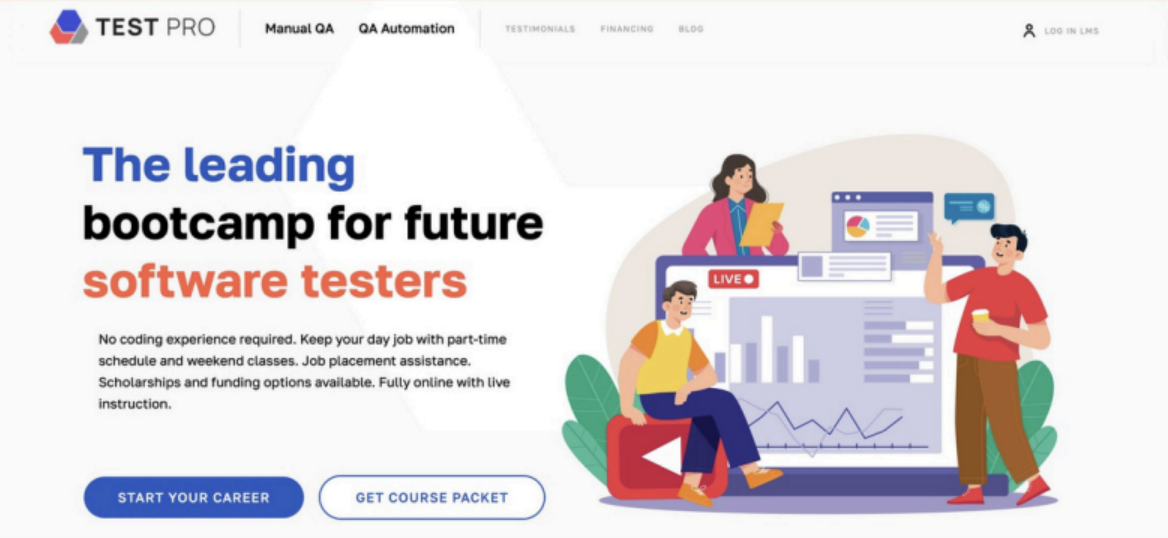
Test Pro is an online QA bootcamp for people who want to break into software testing and build a career in IT.
When our collaboration began in April 2022, the site was getting around
3,666 organic visitors and 156 SEO leads per month.
The goal wasn't simply to lift the rankings of a few individual pages. We needed to turn organic search into a scalable channel for enrolling students in a competitive US EdTech niche.
We built the work around several connected tracks: technical SEO, large-scale semantics, content, optimization of commercial pages, UI/UX, structured data, link building and local presence.
Over the course of the engagement, organic traffic grew from 3,666 to 15,100 visitors per month, and SEO leads went from 156 to 520 per month. That's roughly ×4.1 growth in organic traffic and ×3.3 growth in SEO leads.
What we changed in Test Pro's SEO system
Our core working hypothesis was that Test Pro's potential couldn't be unlocked by a single batch of SEO fixes.
Technical SEO had to guarantee stable indexing. Semantics had to reveal which segments of demand were worth covering. Content had to expand visibility systematically. Commercial pages and UI/UX had to turn traffic into enquiries. And the link strategy had to keep priority pages competitive in US search results.
So instead of a set of independent SEO tasks, we worked with the entire search funnel: from the query in Google to the lead on the site.
What the SEO audit revealed
The first stage was a full SEO audit of the site. Its purpose wasn't just to find technical errors, but to define what had to be fixed before scaling semantics, content and off-page SEO.
-
The technical audit became the foundation for further optimization and let us set clear priorities before scaling the organic channel.
-
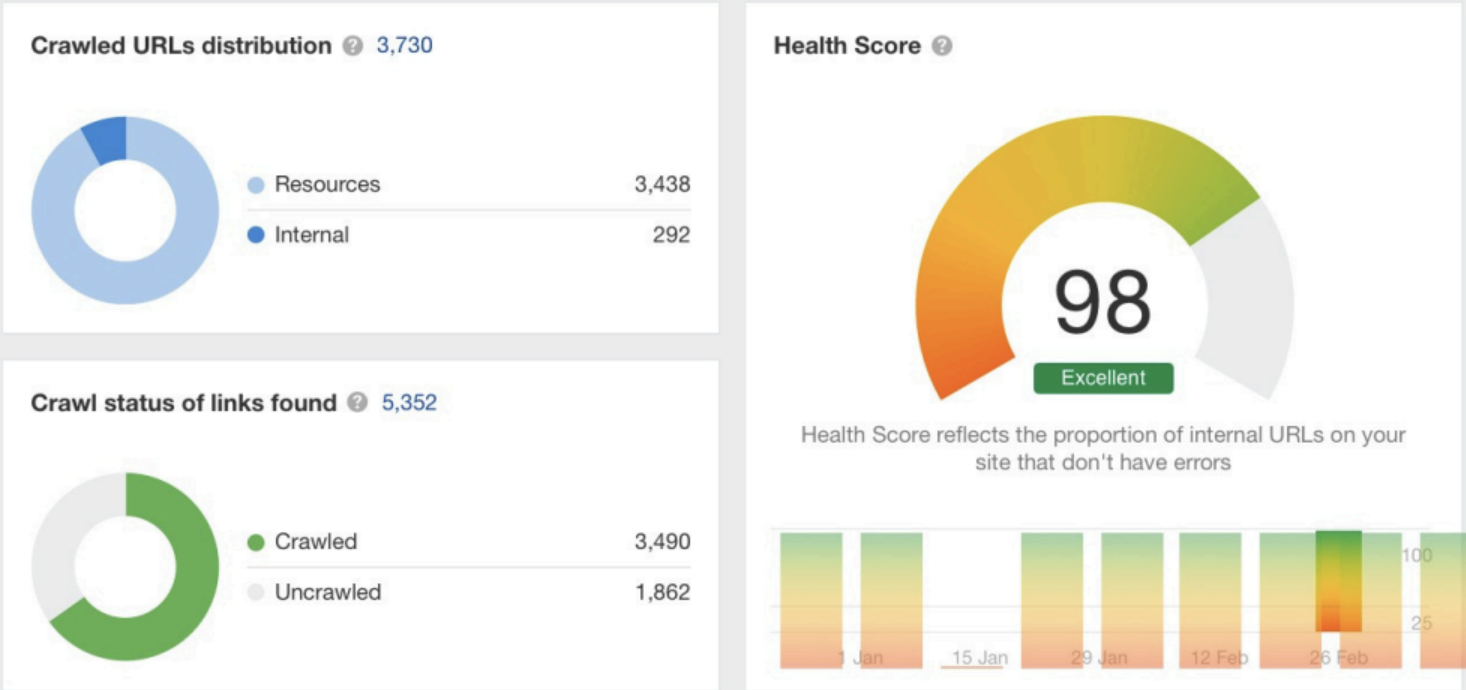
The project records an Ahrefs Health Score of 98/100 after the technical work on the site.
-
The next stages were the semantic core, landing page optimization, blog development, structured data and link building.
In this project the audit wasn't a final report with a list of errors — it was the starting point for the entire SEO system that followed.
Why the SEO strategy drove growth
The biggest gains came not from any single change, but from developing several tracks in parallel. It was the way they reinforced each other that became the basis for scaling the organic channel:
-
A large semantic core.
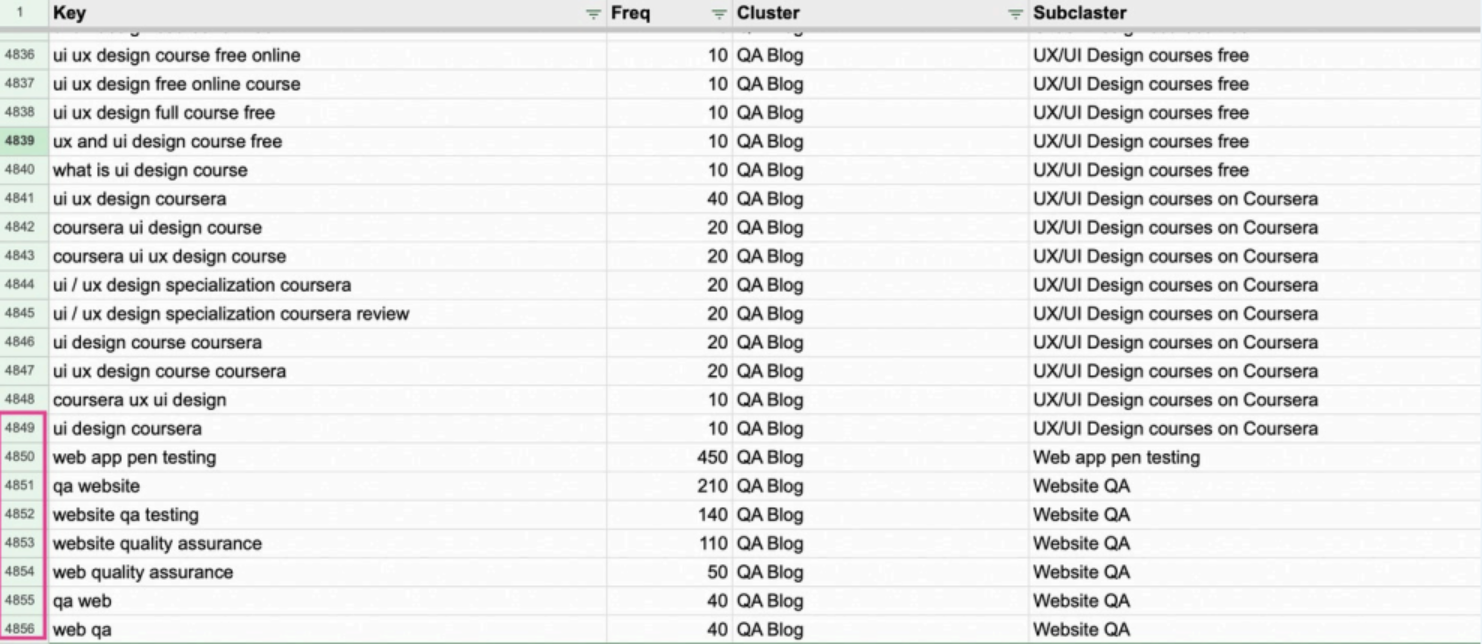
We gathered around 5,000 keywords and built a content plan, which let us systematically expand the range of queries and pages Test Pro could earn organic traffic for.
-
Regular SEO content.
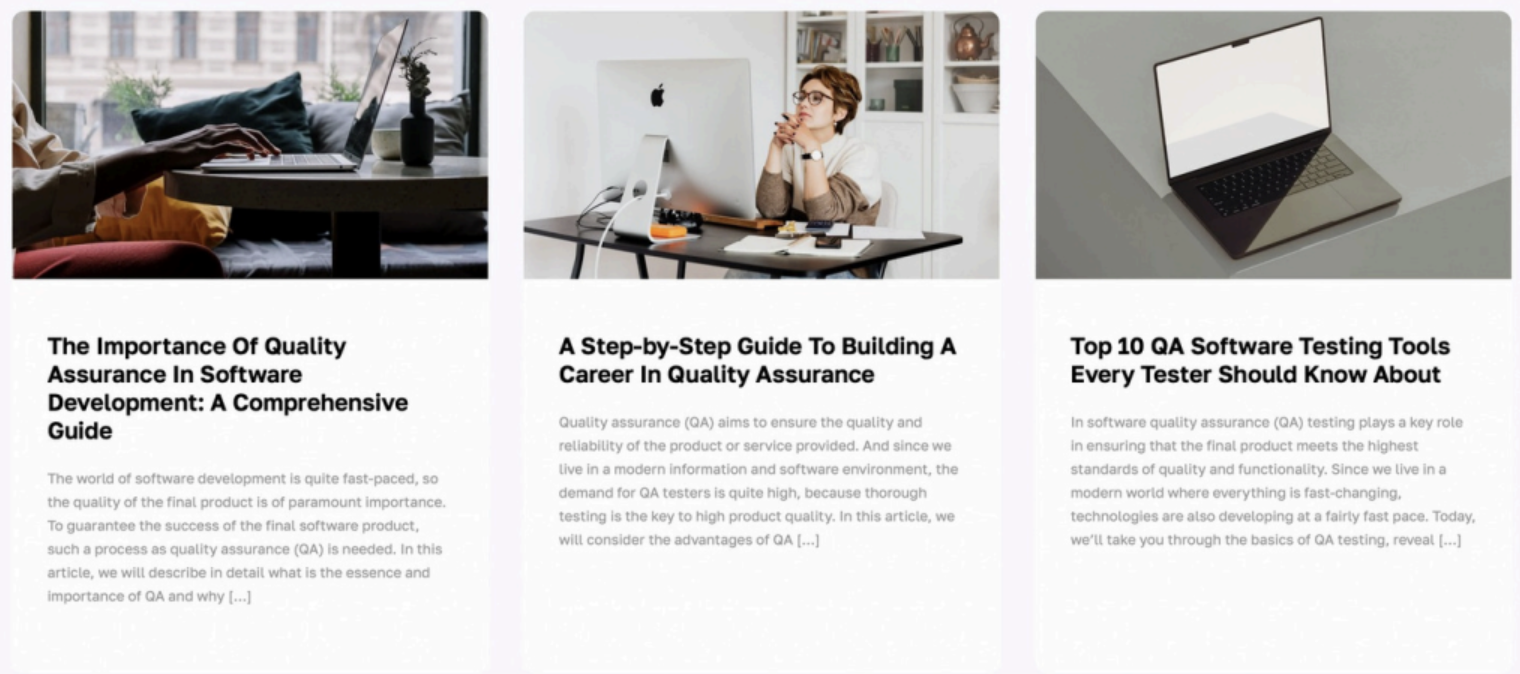
Every month we published up to 10 new optimized articles, widening the informational coverage around QA, software testing and careers in IT.
-
UI/UX and the conversion layer.
Separately, we ran a UI/UX audit and prepared recommendations for redesigning key pages, so that organic traffic didn't just land on the site but converted into enquiries more effectively.
-
Search snippets.
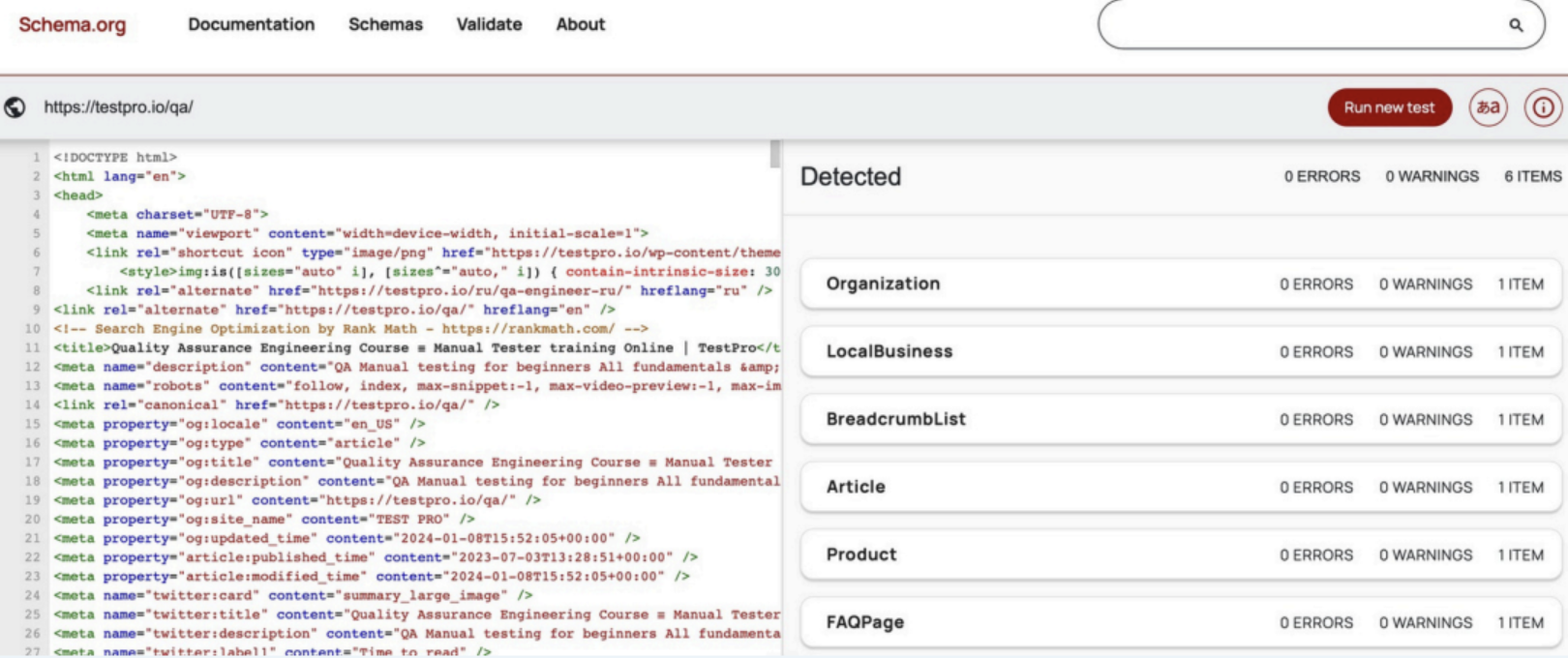
We rewrote the meta tags and implemented structured data to present Test Pro's pages better in the SERPs and give Google more structured information about the site's content.
-
Off-page SEO.
The link strategy focused on PR and guest posts on high-traffic US tech and news outlets with strong DR, primarily to support priority pages and competitive queries.
As a result, SEO worked not as a set of isolated tactics but as a system: the technical foundation supported indexing, semantics defined demand, content expanded coverage, UX helped convert traffic, and off-page SEO strengthened priority pages.