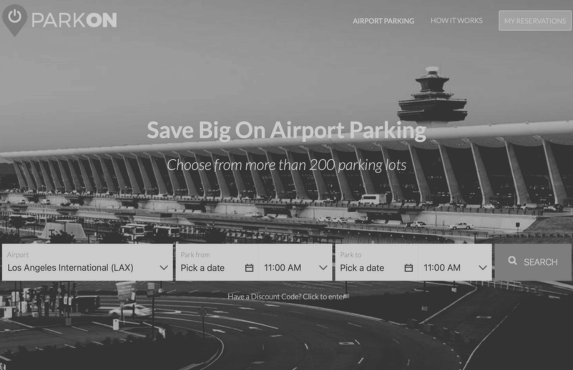
ParkON is a long-term airport parking booking service in the US.
By the time our collaboration began, the site already had an established organic channel and was getting around
36,100 SEO visitors per month.
So the task wasn't to build SEO from scratch, but to scale an already working channel: expand coverage of relevant search demand, strengthen the key landing pages, clean up the link profile and build a structure capable of growing systematically for competitive airport parking queries.
We built the work around technical SEO, a large semantic core, SEO content for the main pages, backlink profile cleanup, structured data, internal linking, link building and local visibility.
Over the course of the work, organic traffic grew from 36,100 to 84,000 visitors per month — roughly 2.3×. SEO leads grew by 1.7× over the same period.
What we changed in ParkON's SEO system
On this project the goal wasn't to find one big SEO fix. The site already had traffic, so the next level of growth required working with the whole system: the technical foundation, the structure of demand, content, the internal connections between pages, and external authority.
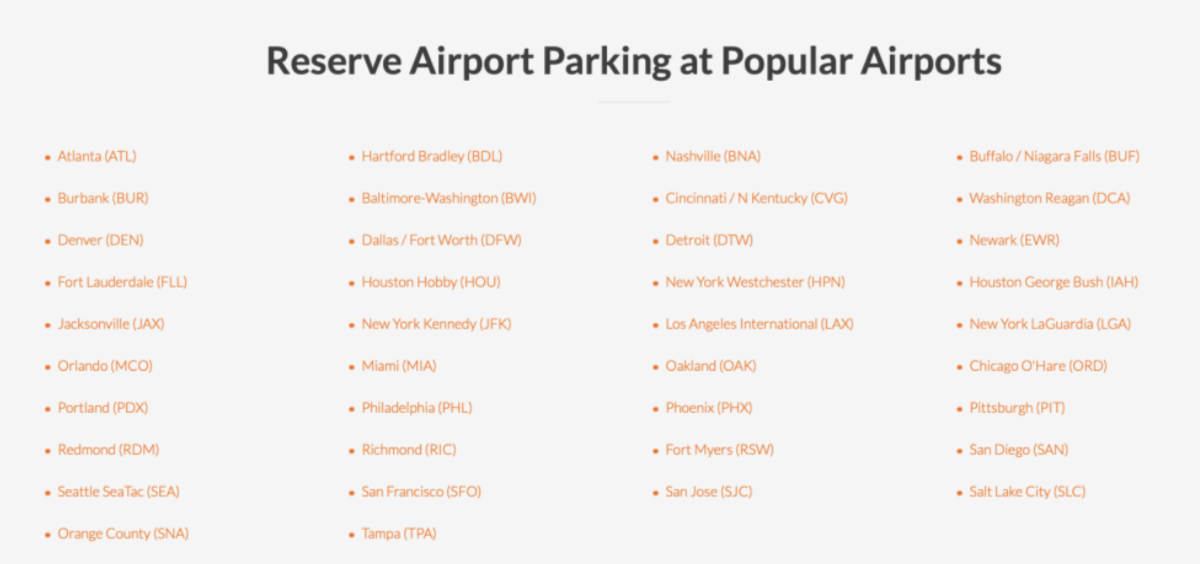
The semantic core defined which segments of airport parking demand were worth covering. SEO copy strengthened the key landing pages. Internal linking tied the pages together. Structured data improved how results appeared in search, and link building supported competitive URLs.
The working model was this: not to optimize individual pages in isolation, but to build a system in which semantics → content → internal links → authority → visibility reinforce one another.
What the SEO audit revealed
The first stage was a full SEO audit. It wasn't just about finding technical errors, but about understanding which constraints had to be removed before scaling the organic channel.
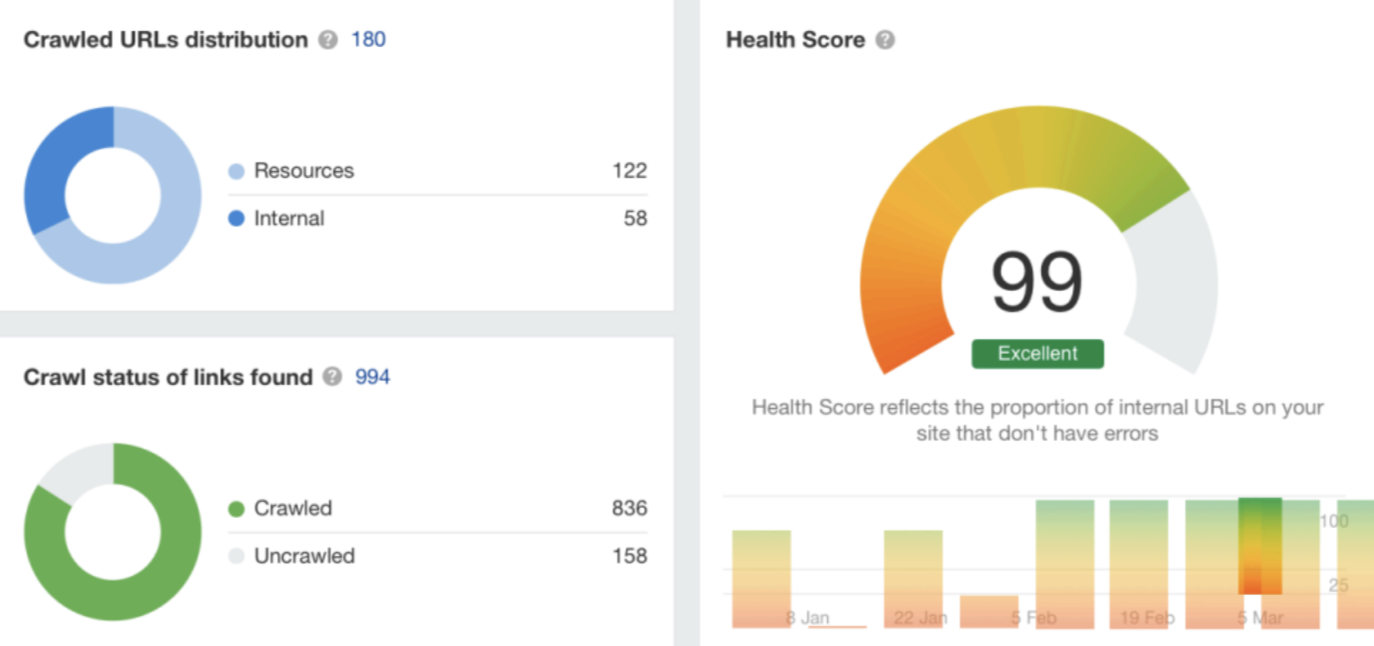
- After technical optimization, the site's Ahrefs Health Score reached 99/100.
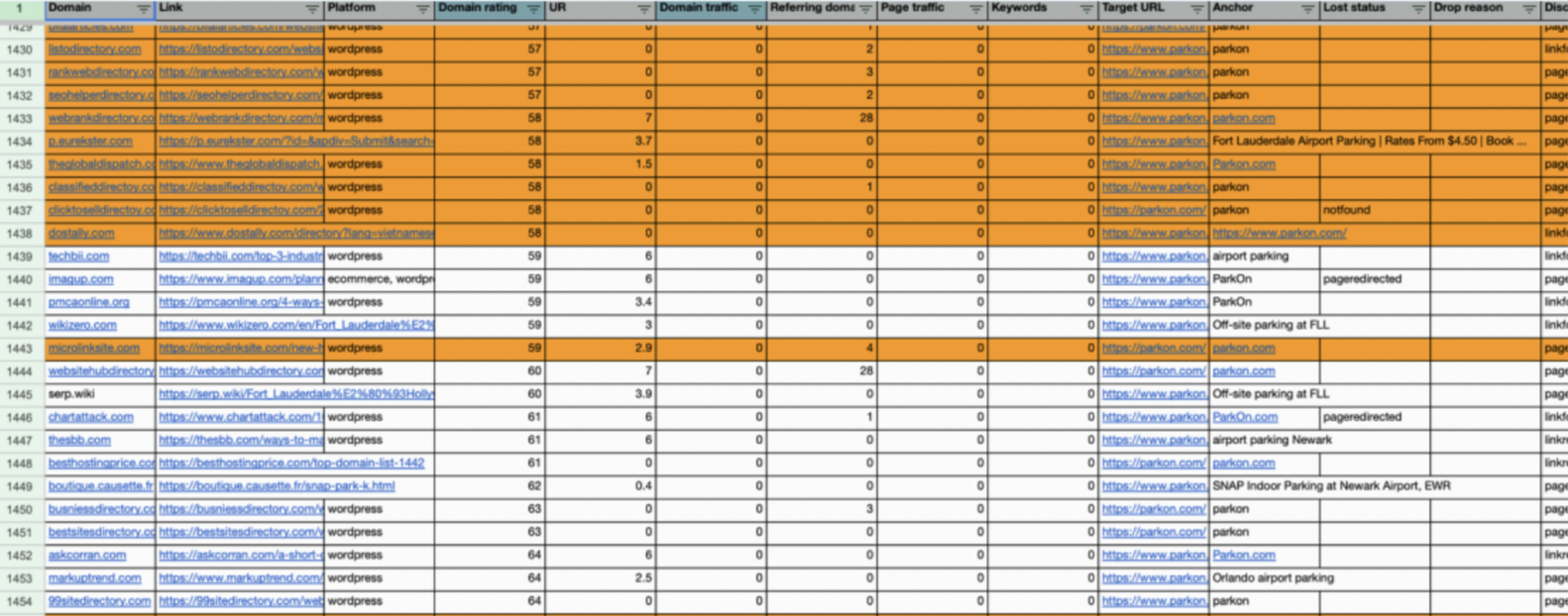
- Separately, we analyzed the backlink profile and identified low-quality SEO links that needed to be disavowed.
- The audit became the foundation for the further work on semantics, landing pages, internal linking, structured data and off-page SEO.
In other words, the audit here wasn't a final document with a list of errors, but the point from which the rebuild of the entire SEO system began.
Why the SEO strategy drove growth
Growth happened against the backdrop of working on several connected tracks at once:
-
Semantic core and content plan.
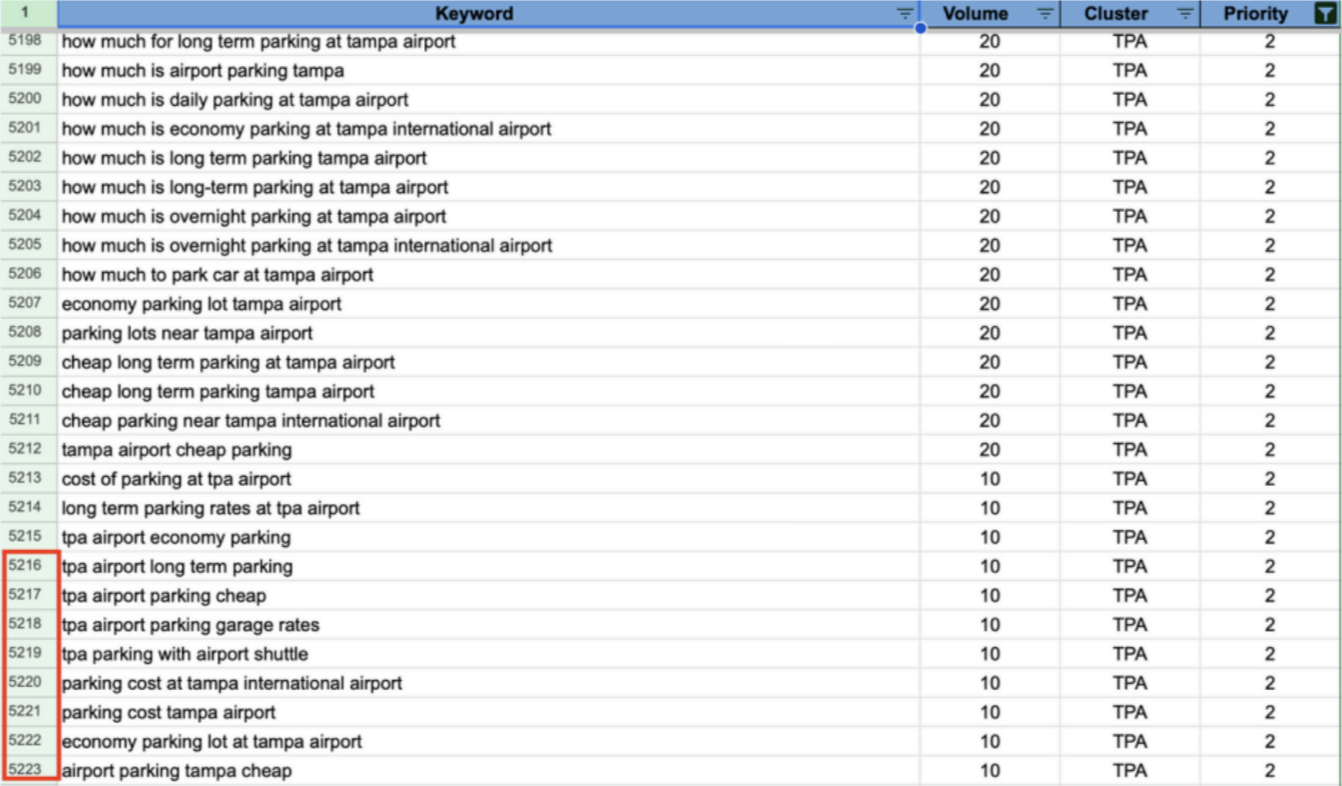
We gathered around 5,000 keywords and structured search demand around airport parking and related scenarios.
-
SEO content on key landing pages.
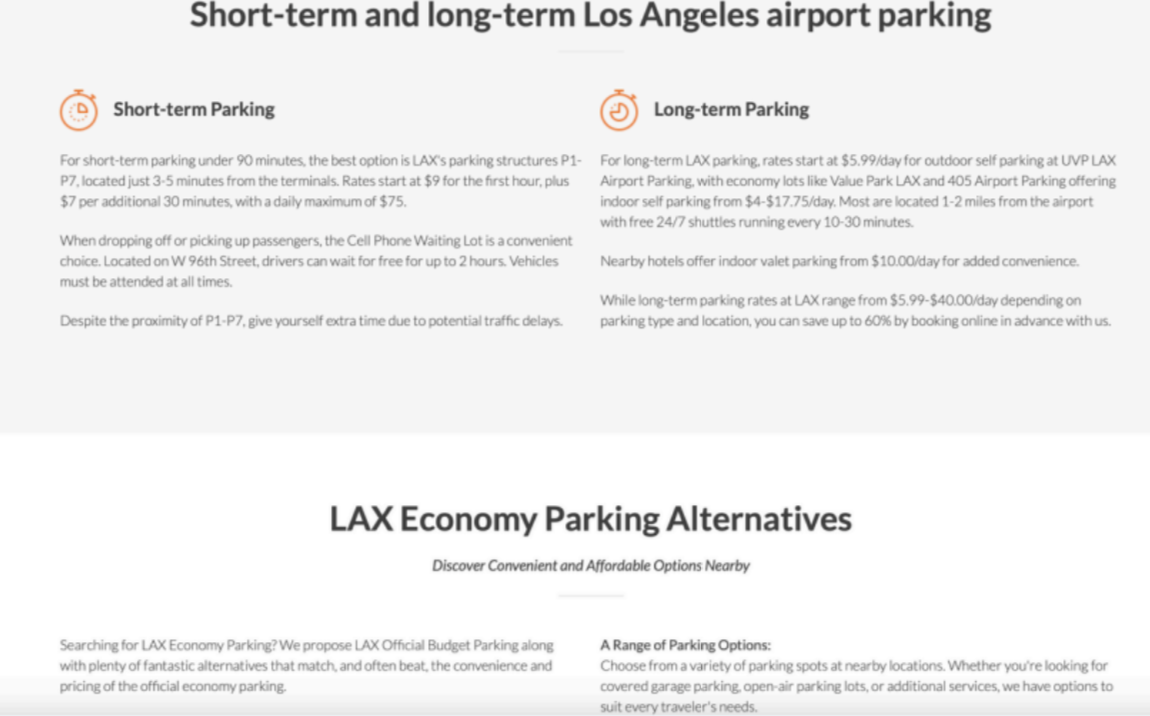
We enriched the main pages with optimized content integrated into design blocks, rather than large walls of text.
-
Backlink profile cleanup.
We audited external links and disavowed low-quality SEO links that could negatively affect the quality of the link profile.
-
Structured data.
We implemented markup with rating data to make search snippets more informative.
-
Internal linking.
We built a system of internal connections between airport landing pages to improve navigation, page discovery and the distribution of internal link weight.
-
Link building and local visibility.
We supported priority URLs through PR and guest posting on relevant high-DR/high-traffic resources and US news portals, and developed Google Maps as an additional organic channel.
As a result, SEO worked not as a set of isolated optimizations but as a connected system: the technical foundation supported indexing, semantics defined demand, content and internal linking expanded coverage, and off-page SEO strengthened competitive pages.